

Industrial property rights
- The concept of industrial property includes innovations related to industrial and commercial activities, which are patents, designs, integrated circuits, industrial designs and models, new plant varieties, trademarks, geographical indications or the so-called source data, geographical indications and trade names, and industrial property includes patents, utility models, trademarks, trade names and drawings. Industrial models, protection of new plant varieties, protection of integrated circuit designs, and commercial and industrial secrets.

Patent
- The patent is the most important intellectual property asset at all and the most important industrial property asset in particular, as it is the hump of human creativity that is unparalleled globally, distinguished by its absolute novelty, creative step and industrial applicability.
- Examples of the patented invention include: the invention of new industrial products, the invention of a new industrial result, the invention of a new industrial method, whether electrical, mechanical or otherwise, the invention of a new application for ancient industrial methods or methods, the invention of new industrial combinations, and the invention of a modification, improvement, or new addition. For an invention for which a patent has already been granted, and for the replacement of one substance with another in the formation of the new industrial production.

Trade Mark
- One of the most important intellectual property rights is the Trademark trademark. Everything that distinguishes a product, a good or a service from others, includes in particular the names that have a distinctive shape, signatures, words, letters, numbers, drawings, symbols, addresses, stores, stamps, and seals.
- The concept of a trademark in the United States is a name, symbol, shape, speech, color, sound, or logo used in commerce, legally reserved to the exclusive right of the owner, that identifies the source of the product or service and distinguishes the product or service from other sources. Within the university, trademarks include The university’s name, logo, or mascot..etc. Moreover, the development of many universities uses trademarks to protect their products and intellectual assets that they produce.
- The Egyptian legislator imposed conditions for the trademark in order to grant its owner the protection prescribed for it. It is stipulated that it take a distinct form for the commodity, product, service or industry, both according to the type of mark, and that the mark be legitimate, that is, it does not violate public order, public morals, etc., and that it be new. And here the Egyptian legislator took the principle of self-branding or branding, from which he concludes by excluding the requirement of absolute novelty in the mark so that it can be granted legal protection, and examples of the trademark, such as the trademark of Coca-Cola Company “Coca-Cola” for soft drink products.

Industrial Designs and Models
- Industrial designs and models are innovations that focus on the appearance, shape, and structure of the products, and the external mold in which they are embodied, making them formal innovations. Similar products, such as arranging and coordinating lines on the surface of products, and three-dimensional shapes with or without colors, when they have taken a new appearance and were usable in the industrial field. It had a distinctive, novel look and was industrially applicable.
- Among the images of industrial designs are drawings on fabrics, on ceramics, and on any other material. There is no lesson in the material on which the drawing is done, nor is a lesson in the method of drawing itself, nor is a lesson in the form of lines and colors or their plurality, just as there is no lesson in the way in which it is drawn or engraved, whether manually or mechanically.
- As for the industrial model, it is the shape of the commodity or the production itself, in the sense of the three-dimensional model, the shape of the product itself, whether it is a machine or otherwise, which has a shadow, on the contrary the drawing or industrial design is two-dimensional, and examples of industrial models are the shape of the refrigerator, washing machine, car and bottle Cups, utensils, etc.
Geographical Indications
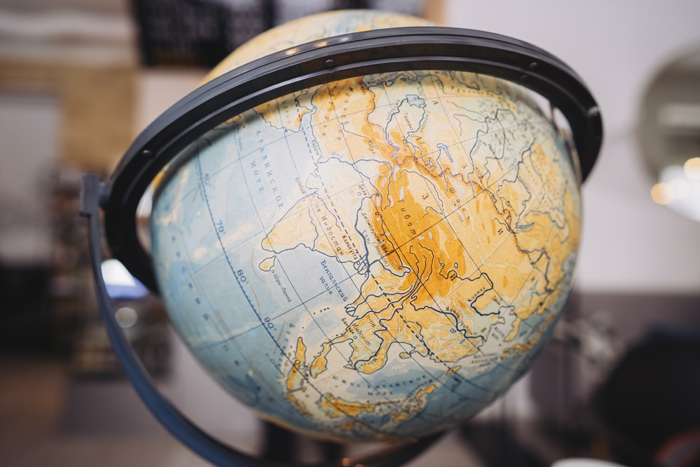
- Geographical indications are those that determine the origin of a commodity in a region or a destination in a member state of the World Trade Organization, or treat the Arab Republic of Egypt reciprocally when the quality, reputation, or other characteristics of this commodity and affecting its promotion are fundamentally related to its geographical origin. The Egyptian legislator stipulated To acknowledge the protection of this type of intellectual property rights, Ali “It is required to protect these indicators that they have gained protection in the country of origin.
- Geographical indications are a geographical place on the globe characterized by a different climate and nature from the rest of the world. These natural features give special features that distinguish the product or commodity, giving it a world-famous commercial reputation.
- For example, in Egypt, “Damietta cheese” has a famous geographical indication, where the nature of the Damietta Governorate has added some characteristics to it that distinguished it from the cheese of other places in the world, and in France, the alcoholic drink of champagne, as it belongs to a region in France that calls this name Champagne.

New Plant Varieties
- The plant varieties are a botanical group of one botanical classifier, of the lowest known grades, which can be determined by expressing the characteristics resulting from a specific genetic structure or a specific group of genetic structures, and distinguishing it from any other botanical group by expressing at least one of the mentioned characteristics, and considering it as a unit Given their ability to reproduce without change. The term of protection for a plant patent is twenty years from the date of filing the application. As for trees and vines, the term of protection is twenty-five years.

Literary and artistic intellectual property
- Copyright
- Copyright is considered an intellectual property asset with artistic and literary characteristics, for example literary, dramatic, musical and artistic original works, software, films, sound recordings and broadcasting. Copyright is defined as the powers granted by laws concerned with the protection of intellectual works to the owners of these works, giving them the right to protect them from publication, commercial exploitation or modification. They are published without the permission of the author and these powers are given to other authors exclusively .
- Literary and artistic works vary, and they include all written books, magazines, and pamphlets that are called literary works, all that is heard of music or songs, which are called musical works, and all that is seen of paintings and drawings that are called artistic works, or everything that is heard and seen in the same Time is like audio-visual works (movies), in addition to plays that are called dramatic works. We conclude from this that the copyrights came from his images, for example, but not as a limitation.
- Among the images that were mentioned in the Egyptian Intellectual Property Protection Law previously referred to are: books, brochures, articles, pamphlets and other written works, computer programs, databases, whether they are readable from a computer or otherwise, lectures, speeches, sermons, and any oral works. Others, if registered, acting works, musical representations and pantomimes, musical works with or without words, audio-visual works, architecture works, works of drawing with lines or colors, sculpture, printing on stone, on fabrics and any similar works in the field of Fine arts, photographic and similar works, applied and plastic art works, illustrations, geographical maps, sketches and three-dimensional works related to geography, topography or architectural designs, derivative works, and protection includes the title of the work if it is innovative.
- However, there are some works that are excluded from legal protection due to the lack of the conditions of innovation and originality. They are just ideas, procedures, methods of work, methods of operation, concepts, principles, discoveries and data, even if they are expressed, described, illustrated or included in a work, and for example, official documents, whatever their language. The original or the language transmitted to it, such as texts of laws, regulations, decisions, international agreements, judicial rulings, arbitrators’ rulings, decisions issued by committees with jurisdiction, and news of accidents and current facts that are merely press news, but if their collection is distinguished by innovation in arrangement, presentation, or Any personal effort is worthy of protection.

Rights Related to Copyright
- The Rome Convention of 1950 organized the legal protection of the rights neighboring the rights of authors Neighboring rights and is considered the second origin of the assets of literary and artistic intellectual property and these rights are limited to three types, the first: the right of performers, the second: the right of producers of sound recordings, and the third: the right of broadcasting organizations.
- Performers
- Performers are the persons who act, sing, recite, sing, play or dance in literary or artistic works protected in accordance with the provisions of this law or that have come to the public domain, or perform in them in one way or another, including folklore expressions.They have the right to communicate their performance to the public and to authorize the public availability, rental or lending of the original recording of the performance or copies of it, and they have the right to prevent any exploitation of their performance in any way without a prior written permission from them and after a prohibited exploitation, recording this live performance on a support or renting it with the aim of obtaining On a direct or indirect commercial return or broadcasting it to the public, as well as their right to rent or lend the original performance or copies of it to achieve a direct or indirect commercial purpose, regardless of the ownership of the original or leased copies, and the public availability of a recorded performance via radio or computers or other means in order to achieve its receipt individually at any time and place, and performers enjoy an exclusive financial right in the field of their performance for a period of fifty years starting from the date of performance or recording, as the case may be.
- Sound Recording Producers
- Producers of sound recordings are the natural or legal persons who record for the first time an audio recording or performance of one of the performers, without affixing the assets to the image within the framework of preparing an audiovisual work, and they have the right to prevent any exploitation of their recordings in any way without a prior written permission from them and after In particular, the exploitation prohibited in this sense from copying, renting, broadcasting, or making it available through computers or other means, publicly making an audio recording available by wire or wireless means, or via computers or other means, and the producers of sound recordings enjoy an exclusive financial right. In the field of exploiting their records for a period of fifty years starting from the date of registration or publication, whichever is later, within the limits stipulated in this law.
- Broadcasting Corporation
- A radio broadcasting organization is the audio or audiovisual broadcast of a work, performance, audio recording, work recording, or performance to the public in a wireless way, and prior to that broadcasting via industrial satellites, broadcasting organizations enjoy financial advisory rights by granting a license to exploit their recordings, and preventing any connection to their television recording of their programs. To the public without a prior written permission from them. In particular, it is a prohibited exploitation. Recording, copying, selling, renting, rebroadcasting, distributing or transmitting these programs to the public by any means, including removing or destroying any technical protection for these programs such as encryption or otherwise, is prohibited. Radio broadcasting organizations enjoy an exclusive financial right that entitles them to exploit their programs for a period of twenty years starting from the date on which these programs were first broadcast.